

What does a business broker actually do?
A business broker is an intermediary who helps business owners sell their company and helps qualified buyers evaluate opportunities to buy a business. The broker’s job is to make the sale process more organized, confidential, and competitive, while keeping the owner focused on running the business until closing.
In practice, that can include preparing a market-based valuation, packaging the opportunity, finding buyers, screening inquiries, managing nondisclosure agreements, coordinating due diligence, supporting negotiations, and keeping the deal moving through closing. A good broker does not replace your attorney, CPA, lender, or tax advisor, but they often help coordinate the moving parts so the process does not stall.
For many owners, the biggest value is not simply “finding a buyer.” It is finding the right buyer, protecting confidentiality, reducing distractions, and creating enough structure that emotions do not drive every decision.
The broker’s role in a smoother sale process
Most owners only sell a business once. Buyers, lenders, attorneys, landlords, and advisors may all enter the conversation, and each party has different priorities. A broker brings a process to that complexity.
A typical sale may move through these stages:
- Preparation and analysis: The broker reviews financials, operations, lease terms, staffing, customer mix, equipment, and growth opportunities to understand what is being sold.
- Valuation and pricing strategy: They help estimate a realistic asking range based on earnings, assets, market demand, risk, and comparable activity where available.
- Confidential marketing: The broker promotes the opportunity without publicly exposing the business name too early.
- Buyer screening: Interested buyers are reviewed for financial capacity, experience, seriousness, and fit before receiving deeper information.
- Negotiation and offer structure: The broker helps compare price, terms, financing, contingencies, transition support, and closing timing.
- Due diligence and closing coordination: They help manage requests, timelines, and communication until the transaction is ready for legal closing.
This structure matters because momentum is fragile. A buyer can lose confidence if records are disorganized. A seller can lose leverage if confidential details are shared too widely. A deal can collapse if price, financing, lease assignment, inventory, or training expectations are not handled clearly.
Valuation is about more than a multiple
Owners often want one simple number. In reality, valuation is usually a range shaped by earnings quality, owner involvement, industry trends, customer concentration, location, systems, staff depth, assets, and transferability.
A broker may use market comparisons, asset values, seller’s discretionary earnings, EBITDA-based methods, or a combination depending on the business. The goal is not to chase the highest possible asking price if it scares away qualified buyers. The goal is to support a price that can attract interest, survive due diligence, and lead to a closeable offer.
This is where business advisory services can be useful before going to market. A broker or advisor may point out issues that could reduce buyer confidence, such as unclear add-backs, outdated financial statements, undocumented processes, or too much dependence on the owner. Fixing those issues before marketing can make the business easier to understand and easier to transfer.
How do brokers protect confidentiality?
Business brokers protect confidentiality by limiting what is shared, when it is shared, and with whom. The business name, exact location, customer lists, employee details, supplier terms, and sensitive financial information are usually withheld until a buyer has been screened and has signed a nondisclosure agreement.
Many brokers prepare a blind profile first. This may describe the industry, general region, size, cash flow range, and growth potential without naming the company. Serious buyers who pass initial screening may then receive a Confidential Business Review or similar information package with deeper details.
Confidentiality is important because premature exposure can unsettle employees, customers, competitors, vendors, or landlords. It can also hurt operations if the owner spends too much time answering questions from people who cannot actually close.
A practical confidentiality plan should include:
- A blind listing that attracts buyers without revealing identifying details.
- Buyer qualification before sensitive records are released.
- Signed NDAs with clear limits on use and disclosure.
- Staged information sharing so deeper details come later in the process.
- Controlled meetings that avoid disrupting staff or customers.
- Clear communication rules about who speaks with lenders, landlords, employees, and vendors.
The best brokers balance marketing reach with discretion. More exposure is not always better if it creates unnecessary risk.
Business brokers, M&A advisors, and franchise brokers are not the same
Different deal types need different expertise. A local restaurant sale, a regional services company acquisition, and a franchise resale may all involve buyers and sellers, but the process and documentation can be very different.
| Advisor type | Best fit | Typical focus | Key benefit |
| Business brokers | Main Street and many lower middle-market businesses | Valuation, confidential marketing, buyer screening, negotiations, closing logistics | Practical support for owner-operated or privately held business sales |
| M&A advisors | Larger or more complex companies | Strategic buyers, private equity, deal structuring, mergers and acquisitions strategy | More advanced transaction strategy for complex deals |
| Franchise brokers | Franchise resales or new franchise opportunities | Franchise agreements, brand requirements, territory issues, franchisor approval | Guidance specific to franchise systems and buyer fit |
| Commercial brokers | Real estate-heavy transactions | Buildings, leases, land, property valuation, tenant or buyer placement | Real estate expertise when property is central to the deal |
If your company is relatively small, owner-operated, and valued based on cash flow, a business broker may be the right fit. If the sale involves strategic acquirers, multiple entities, sophisticated deal terms, or a larger enterprise value, an M&A advisor may be more appropriate. If the business is part of a franchise system, franchise brokers or franchise-experienced business brokers can help navigate franchisor rules and approval steps.
Commercial brokers can also be involved when the transaction includes real estate. For example, a seller may need one advisor for the operating business and another for the property, or a coordinated strategy if the buyer wants both.
Choosing the right broker for your market
Local knowledge can matter, especially when buyers care about foot traffic, labor availability, leases, neighborhood growth, or regional industry trends. Someone searching for business brokers San Antonio, for example, may want a broker who understands local buyer demand, financing relationships, small business activity, and the difference between selling a service company, restaurant, medical practice, or trade business in that market.
Still, geography should not be the only factor. Some businesses benefit from regional, national, or industry-specific buyer outreach. The right broker should be able to explain how they will market the business confidentially, where likely buyers may come from, and why their strategy fits your company.
What should you ask before hiring a broker?
You should ask about experience, process, fees, confidentiality, buyer screening, communication, and conflicts of interest before signing an engagement. A reputable broker should be able to explain their approach in plain language and give you a realistic view of what may help or hurt the sale.
Use this checklist during interviews:
- Relevant experience: Have they sold businesses like yours in size, industry, or deal structure?
- Valuation method: How will they support the asking price, and what assumptions are included?
- Marketing plan: Will they use blind profiles, buyer databases, industry outreach, or targeted campaigns?
- Confidentiality process: How are NDAs, buyer screening, and staged disclosures handled?
- Buyer qualification: Do they verify funds, lending ability, experience, and seriousness?
- Fee structure: Is there an upfront fee, a retainer, a success fee, or a minimum commission?
- Commission expectations: Business broker commissions often start around 5% of the sale price, but terms vary by deal size and broker.
- Communication cadence: How often will they update you, and what information will be included?
- Potential conflicts: Do they represent buyers, sellers, or both in certain situations?
- Professional standards: Do they participate in industry associations or hold relevant designations, such as Certified Business Intermediary, when applicable?
Be cautious if a broker promises an unrealistically high price, pressures you to sign quickly, dismisses confidentiality concerns, cannot explain their buyer-screening process, or seems vague about fees. A strong broker should be optimistic about opportunity but realistic about risk.
Buyers benefit from broker support too
Although sellers hire many business brokers, buyers also gain structure from broker-led transactions. A buyer who wants to buy a business may rely on the broker to understand the opportunity, request information, schedule meetings, clarify seller expectations, and move through due diligence.
Financing is often part of the conversation. Buyers may use personal equity, seller financing, SBA-backed lending, retirement funds, or a combination, depending on the transaction and lender requirements. A broker cannot guarantee financing, but they can help buyers understand what information lenders may request and why certain deal terms may be more financeable than others.
For sellers, this matters because a high offer from an unqualified buyer is not necessarily the best offer. A slightly lower offer with stronger financing, a clear transition plan, and fewer uncertain contingencies may be more likely to close.
Preparing before you go to market
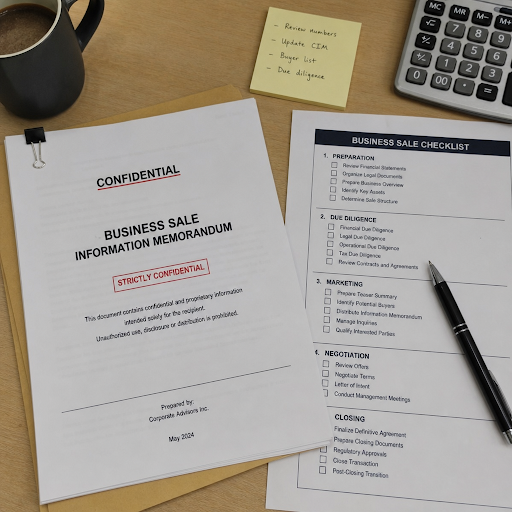
The best time to prepare for a sale is before buyers start asking hard questions. Clean records and clear operations can reduce friction and help buyers see the business as transferable.
Before contacting brokers, gather:
- Three years of financial statements or tax returns, if available.
- Current year profit and loss statements.
- Lease documents, equipment lists, inventory details, and major contracts.
- A summary of staff roles, owner responsibilities, and daily operations.
- Notes on growth opportunities, recurring revenue, customer mix, and vendor relationships.
- Any legal, tax, licensing, or compliance issues that may affect the sale.
You do not need everything perfect before the first conversation. However, the more organized you are, the easier it is for a broker to provide useful guidance and build buyer confidence.
The right broker helps you sell with less guesswork
Selling a business is a major decision, and the right support can make the process more disciplined, confidential, and manageable. Business brokers bring market perspective, buyer access, negotiation support, and transaction coordination that many owners do not have time to build on their own.
Before you decide who should help you sell my business, compare broker types, ask direct questions, review fee structures, and look for a process that protects both value and confidentiality. A thoughtful choice now can help you avoid wasted time, reduce surprises, and move toward a sale that fits your goals.
Contact Us
Contact Rocky Mountain Business Advisors to schedule a confidential consultation with our team.
"*" indicates required fields

In your corner,
Jules Francesca
Wyoming Business Advisor | Rocky Mountain Business Advisors
307.200.7274
jules@rockymountainba.com
Follow me on LinkedIn